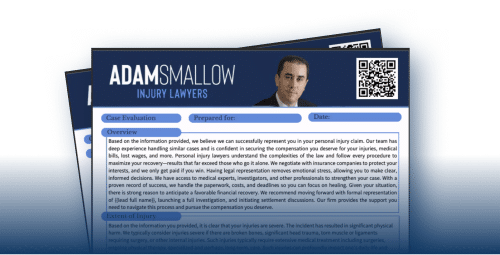

Doctors, medical records, and treatment plans can help show the nature of your injuries, connect them to the accident, and document the cost of your care. Insurance companies review this information when deciding whether to accept a claim and how much compensation is appropriate. A car accident lawyer can help you better understand what you need to build your case.
Navigate This Page
- How Do Medical Records Prove Your Car Accident Injuries?
- The Importance of Seeing a Doctor After a Car Accident
- How Medical Treatment Connects Your Injuries to the Accident
- The Impact of Medical Treatment on The Value of Your Car Accident Claim
- How Do Pre-Existing Conditions Affect Your Car Accident Claim?
- Medical Records and Car Accident Claim FAQs
- Get in Touch With Our Legal Team Today for Help With Your Claim
How Do Medical Records Help Prove Your Car Accident Injuries?
Medical records are commonly used to document injuries from car accidents and are among the strongest evidence in these cases. Physician notes and diagnostic testing can provide objective evidence of your injuries and directly link them to the accident.
Similarly, these records can help establish a timeline for the case, show the extent of your injuries, and outline your recovery process. However, medical records do not guarantee that insurers or the court will accept every documented injury. Instead, they are used to help build a compelling case alongside other forms of evidence.
The Importance of Seeing a Doctor After a Car Accident
It is always important to seek a medical evaluation after a collision, regardless of how severe your injuries may first appear. In many cases, symptoms may not be obvious right away because adrenaline and the circumstances mask them.
Seeing a doctor as soon as possible allows a medical professional to identify and document any injuries for a claim. Delaying treatment often makes it more challenging to establish when the injuries occurred and connect them to the accident.
Get on the road to recovery with competent legal representation and high-quality medical professionals. Contact our Maryland personal injury lawyer today.
Medical Documentation Connects Your Injuries to Your Car Accident
Medical causation is an essential piece of a car accident claim. It is used to identify your injuries, link them directly to the incident, and assess any pre-existing conditions that may have worsened because of your accident. Documentation can reveal how the incident occurred, when your symptoms began, and any relevant prior medical history. A clear, consistent treatment timeline can help connect the injuries to the wreck, especially if the insurance company argues that an injury came from a prior condition or another cause.
The Impact of Medical Treatment on the Value of Your Car Accident Claim
Medical treatment can help document the value of a claim, but it does not determine the value of your claim on its own. Preserving bills and receipts will support your claim for economic damages by showing the cost of appointments, testing, medication, rehabilitation, and other necessary care. Similarly, ongoing treatment can document continuing symptoms and the possible need for future care.
However, your damages can include more than just compensation for your medical treatment or possible future care. Damages can also include lost income and non-economic damages such as emotional pain and suffering.
How Do Pre-Existing Conditions Affect Your Car Accident Claim?
A prior injury or medical condition does not necessarily prevent you from seeking compensation after a crash. However, you should give healthcare providers complete and accurate information about your medical history.
Medical records can show how your condition changed after the accident by separating prior symptoms from new or worsening ones. By using these, you make it harder for an insurer to claim that your injuries are unrelated to the crash. Keep in mind that you may still be entitled to compensation if the accident aggravated a pre-existing condition, but you will need documentation to support that connection.
Frequently Asked Questions About Medical Records and Car Wrecks
How Soon Should I See a Doctor After a Car Accident?
Seek medical care as soon as possible, even if your injuries initially seem minor or non-existent. Immediate treatment prioritizes your health and documents the connection between the accident and your injuries.
What Are the Consequences of a Treatment Gap?
A gap in treatment can lead the insurance company to question the severity of your injuries or if they were caused by the accident. If there is a reason for the gap, such as cost or scheduling issues, document it.
What if I Lack the Necessary Health Insurance To Cover My Medical Bills?
If you do not have sufficient insurance for your treatment, other coverage options might be available through your auto insurance policy or a future settlement. By speaking with an attorney, you can better understand all available sources of compensation.
Get in Touch With Our Legal Team Today for Help With Your Claim
Doctors, medical records, and treatment can significantly affect a car accident claim and can make a meaningful difference in the outcome of your case. At Adam Smallow Injury Lawyers, we can review your medical documentation, answer your questions, and help you pursue the compensation you deserve. Contact us at (410) 449-7900 to discuss your claim with our legal team.