
Even a strong car accident claim can be weakened by avoidable mistakes. Delaying medical treatment or having incomplete medical records can make it harder to prove the extent of your injuries. Your claim can also be threatened by statements made to the insurance company, an early settlement, contradictory social media posts, lost evidence, or a missed legal deadline. At Adam Smallow Injury Lawyers, we get you the support you need and help you avoid common missteps that can harm your claim.
Navigate This Page
- Delaying Medical Treatment for Your Injuries
- When Insurers Use Your Statements Against You
- Settling Your Case Without Knowing The Value of Your Claim
- Posting Inconsistent Information on Social Media
- Insufficient Evidence To Prove Your Case
- Delaying the Filing of Your Claim
- Get the Legal Support You Deserve With Your Claim
Delaying Medical Treatment for Your Injuries
Delaying medical treatment or having unexplained gaps in care allows an insurer to argue that your injuries are unrelated to the accident or not as serious as you’ve claimed. Because of this, you should seek medical attention right away.
After seeing a doctor, it is also important to follow all of their recommendations and attend any follow-up appointments. Having consistent medical appointments will be reflected in your records, providing documentation of your symptoms, diagnoses, treatments, and a general timeline showing how the injuries affect your daily life. Additionally, any unavoidable gaps in treatment will need to be explained, and your medical records can help with this.
We understand that going to a doctor and committing to follow-up appointments can be a challenge if you don’t have medical insurance. However, your attorney can help you identify treatment options, including offering recommendations for providers who will agree to wait for payment until your claim is resolved.
Your Medical Records Can Strengthen or Weaken Your Claim
Your medical records will create a timeline of your treatment journey and track your progress. When attending your appointments, be honest about your injuries and the incident so that this information is accurately reflected in your medical records. This includes:
- Explaining how your accident happened
- Reporting all your symptoms
- Describing how the injuries affect your work and daily activities
Clear and consistent medical records will clarify your diagnoses, symptoms, treatment, physical restrictions, prognosis, and how your injuries connect back to the accident. However, missed appointments, gaps in treatment, incomplete records, or changing descriptions of your symptoms could potentially give insurers reasons to question or undervalue your claim.
The Complications of Pre-Existing Conditions
Although having a pre-existing condition does not automatically bar you from receiving compensation, insurers might use a pre-existing condition to challenge whether the accident caused your symptoms or exacerbated a pre-existing condition. If your medical history and records are complete and accurate, your attorney will be able to respond to these arguments with proof, showing how the accident caused or worsened your condition.
When Insurers Use Your Own Statements Against You
Insurance adjusters represent the insurance company, not you. Their job includes investigating your claim and protecting their employer by limiting how much the insurer pays out. To do this, they often seem helpful. Immediately after an accident, they will be sympathetic and kind.
Oftentimes, adjusters will request that you make a recorded statement after your accident. Later, they could attempt to use your comments to challenge fault or minimize your injuries. If you have to speak with an insurer before you have an attorney, you should:
- Avoid guessing
- Do not admit fault
- Do not downplay your symptoms
Even if you reply politely to a question by saying you are fine, or make an uncertain guess about the crash, it could easily be taken out of context.
If you can, consider speaking with an attorney before giving a recorded statement so you understand your rights and the potential value of your claim.
Settling Your Case Without Knowing The Value of Your Claim
Oftentimes, an insurance adjuster will pressure you to settle your claim immediately after an accident. It can be tempting to accept it.
However, the full value of a claim is not usually clear immediately after an accident. Medical treatment might be ongoing, you might miss more work than expected, or you could even develop lasting symptoms that affect your daily life. After an accident, you are entitled to recover compensation for your medical expenses, lost income, future care, and other losses that can include money for emotional pain and suffering.
Settling your case means that you cannot seek any additional damages if your settlement does not cover your costs. A settlement requires you to sign a release resolving your full claim. Once signed, you are prevented from seeking additional compensation for the same injuries.
Before you agree to a settlement, you should discuss your injuries and damages with an experienced car accident lawyer to make sure your settlement compensates you for all of your damages.
Get on the road to recovery with competent legal representation and high-quality medical professionals. Contact our Maryland personal injury lawyer today.
Posting Inconsistent Information on Social Media
Even if your social media pages are private, insurance companies will review photographs, videos, comments, check-ins, and other online activity when evaluating your injury claim. A post that shows you traveling, attending an event, or doing physical activity could easily be taken out of context and used to argue that your injuries are less serious than you reported.
While your claim is pending, avoid posting about the accident, your injuries, or your recovery on social media, including Facebook, Instagram, and TikTok. Ask your friends and family not to tag you or share updates about you, since privacy settings do not always keep posts private.
Insufficient Evidence To Prove Your Case
Insufficient evidence from your accident can significantly harm your claim. Not having the right evidence will create opportunities for disputes because drivers can tell different stories about what happened. Evidence that can show how a collision occurred includes:
- Photos of the vehicles
- Photos of the damage
- Photos of the road’s conditions at the time of the accident
- Photos of the scene, including traffic signs, skid marks, and debris
- Photos of visible injuries
Eyewitness testimony might also be necessary for your case, so the names and contact information of witnesses who were at the scene are also important to have.
When Drivers in an Accident Leave the Scene
Maryland Transportation § 20-102 requires drivers involved in an accident causing bodily injury or death to stop and remain at the scene until they have satisfied the applicable statutory requirements. Leaving the scene could result in legal penalties and make it harder to identify the driver and preserve important evidence.
Delaying the Filing of Your Claim
Under Maryland’s statute of limitations, you generally have three years from the date of the crash to file a civil lawsuit. If you miss the deadline, you will lose your right to seek compensation.
Waiting can also make your claim harder to prove. Photos or videos could easily be lost, witnesses might forget important details, and medical or insurance records could become difficult to find. Acting early can help preserve important evidence.
Get the Legal Support You Deserve With Your Claim
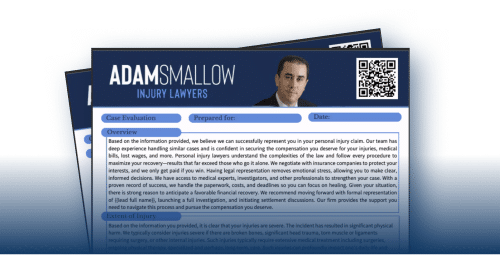
At Adam Smallow Injury Lawyers, we offer free initial case evaluations. Our legal team can review your car accident claim and identify potential threats to your car accident claim.
Through our firm’s “From Hurt to Help” approach, we provide compassionate guidance and keep clients informed throughout the process. Contact our law office today at (410) 449-7900 to schedule a free consultation and discuss your legal options.