
Migraines and Driving:
What Every Driver Needs to Know
About 12% of Americans—roughly 39 million people—experience migraines, a neurological condition that causes debilitating headaches. If you get migraines, you know how hard it is to drive when they strike. The pain alone is enough to affect concentration, but this is only one of many symptoms that impact driving. Light and sound sensitivity make sunlight, headlights, sirens, and horns unbearable. Blinking lights aggravate dizziness and nausea.
This guide provides important information about the physical and legal risks of driving with a migraine, with guidance for keeping yourself and others safe.
What Is a Migraine and Why It Matters on the Road
A migraine is more than just a headache. It is a complex neurological condition that occurs repeatedly and affects the entire body. Most migraines cause throbbing pain on one side of the head, severe enough to interfere with normal activities. Migraines also cause the following symptoms:
- Sensitivity to light, or photosensitivity
- Sensitivity to sound, or phonosensitivity
- Nausea and vomiting
- Visual disturbances
- Confusion
- Dizziness
- Muscle weakness
- Fatigue
- Uncontrollable yawning
About 25% of migraine sufferers experience auras up to an hour before a migraine. An aura may look like blurred vision, flashes of light, wavy lines, or blind spots.
Driving exposes you to bright lights, loud noises, and stressful environments that can aggravate or trigger migraines.
The Risks of Driving During a Migraine
According to a 2020 study, 66% of drivers with chronic migraine avoided driving when their pain was severe. Driving with a migraine can put you and others at serious risk because of visual impairment, delayed reaction time, and sensitivity to light and sound.
Vision Impairment
Vision impairment can occur before, during, and after a migraine. You may experience blurred vision, blind spots, flashes of light, and visual distortions. These disturbances could keep you from seeing cars in intersections or pedestrians crossing the street. You may not notice potholes or debris on the road. You may have trouble judging distances and staying in your lane.
Delayed Reaction Time
The intense pain of a migraine can interfere with concentration as you make adjustments to cope, sometimes unconsciously. You may move your head more slowly, so you take longer to notice hazards. Brain fog and drowsiness could slow your brain processing time, so you are unable to respond as quickly to hazards as you usually would. Here are a few examples of hazards you might not respond to on time because of your symptoms:
- The car in front of you stopping suddenly
- A pedestrian crossing unexpectedly
- An animal crossing the road
- A traffic light changing color
- Unexpected objects in the road
Sensitivity to Light and Sound
Light sensitivity during a migraine is dangerous whether you drive during the day or night. During the daytime, you may need to drive into the sun. Sunlight can also affect you through your rearview mirror or by reflecting off surfaces. This can be more blinding than usual during a migraine. Light flickering between trees and rapid transitions from shade to brighter areas can cause involuntary eye closing or temporary blindness when you have a migraine. Oncoming headlights and blinking lights at night can be disorienting, and distances can be hard to judge.
Recognizing your limitations is an important step in forming a plan for staying safe during migraine attacks on the road.
Migraine Stages
You may experience warning signs ahead of a migraine and lingering effects afterward. These extra symptoms are stages of migraines known as prodrome and postdrome. The prodrome phase may cause uncontrollable yawning, food cravings, and mood changes during the days or hours leading up to a migraine. After the migraine subsides, you may experience the postdrome stage for up to two days, which can include exhaustion, confusion, difficulty concentrating, and dizziness.
Warning Signs: When to Pull Over Immediately
If possible, avoid driving with a migraine. If you notice any of the following warning signs, pull over immediately and call someone who can help you get to your destination safely.
- Vision disturbances: Auras, blurred vision, and blind spots hide hazards.
- Light sensitivity: Sunlight and headlights blind and disorient.
- Dizziness: Spinning sensations impair spatial judgment.
- Nausea: Vomiting causes sudden loss of control.
- Brain fog: Confusion compromises judgment and reaction time.
- Sleepiness: Fatigue leads to slow reactions and falling asleep at the wheel.
- Weakness: Loss of strength and sensation reduces vehicle control.

Gender Differences in Migraine: Prevalence and Impact
Women are three times more likely to suffer migraines than men, according to research published in Healthcare (Basel). Women also tend to experience more frequent, more severe, and longer-lasting migraines. Migraines are the leading cause of disability in women ages 15-49. They commonly peak between ages 35-39, during a stage in women’s lives when work and family responsibilities put pressure on women with migraines to drive.
Women with migraines often face unfair stigmatization. Health care providers, employers, and even family members dismiss migraines as “just headaches” and assume they are caused by emotions or hormones. As a result, a woman can go through an entire lifetime without treatment or support for a legitimate neurological problem. These stigmas increase pressure on women to drive and make it difficult for them to reach out for help.
Safety Tips Checklist
Migraines can be unpredictable, and getting caught behind the wheel with a migraine can impair your ability to keep yourself and other roadway users safe. However, you can take proactive steps to minimize the risks. This checklist provides preventive measures and is meant to empower you to drive safely and confidently.
Before Driving
- Assess your risk: Evaluate whether you are experiencing warning symptoms, including auras, nausea, or light sensitivity. If so, do not drive.
- Take preventive medication. Take migraine prevention medication before you drive or as directed by your doctor.
- Pack a migraine survival kit. Include migraine medication, water, snacks, sunglasses, earplugs, and a cold pack.
- Inform passengers. Choose a designated driver in case a migraine develops. If you have children, teach them to stay calm and call someone if you get a migraine.
- Plan your route. Plan the least stressful route you can, with safe areas for stopping. Use a navigation system.
- Have someone on-call. Ask a few friends or family members to be available to pick you up if a migraine strikes while you are driving.
- Know your triggers. Have a plan for avoiding triggers, such as sunlight or glare. If possible, plan trips for times when triggers are less pronounced.
During the Drive
- Be self-aware. Monitor yourself for symptoms, particularly if you drive into areas with triggering conditions.
- Stay hydrated and nourished. Drink water throughout your trip and snack often if you are driving for an extended period.
- Minimize bright sunlight. Use sunglasses and your visor, even on cloudy days, to minimize the impact of bright light.
- Minimize driving stress. Give yourself plenty of time to arrive and avoid heavy traffic.
- Minimize stimulation. Keep the radio volume low, avoid strong smells, maintain a comfortable temperature, and minimize conversations.
- Pull over. If you notice any warning signs of a migraine, pull over as soon as it is safe to do so.
- Take medication. If a migraine develops, take medication after you pull over, and rest until it subsides.
- Call someone. If the migraine does not subside, do not continue driving. Let a passenger drive or call a safe person to come pick you up.
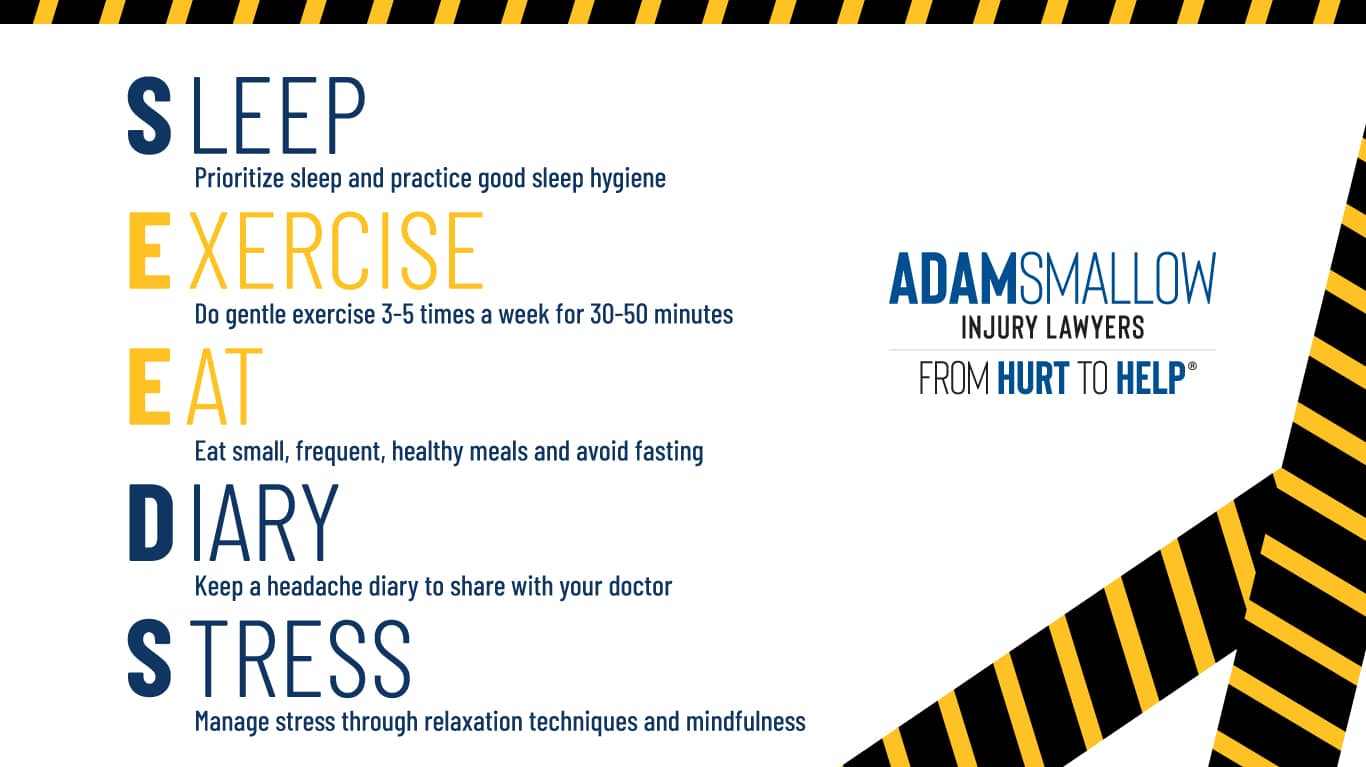
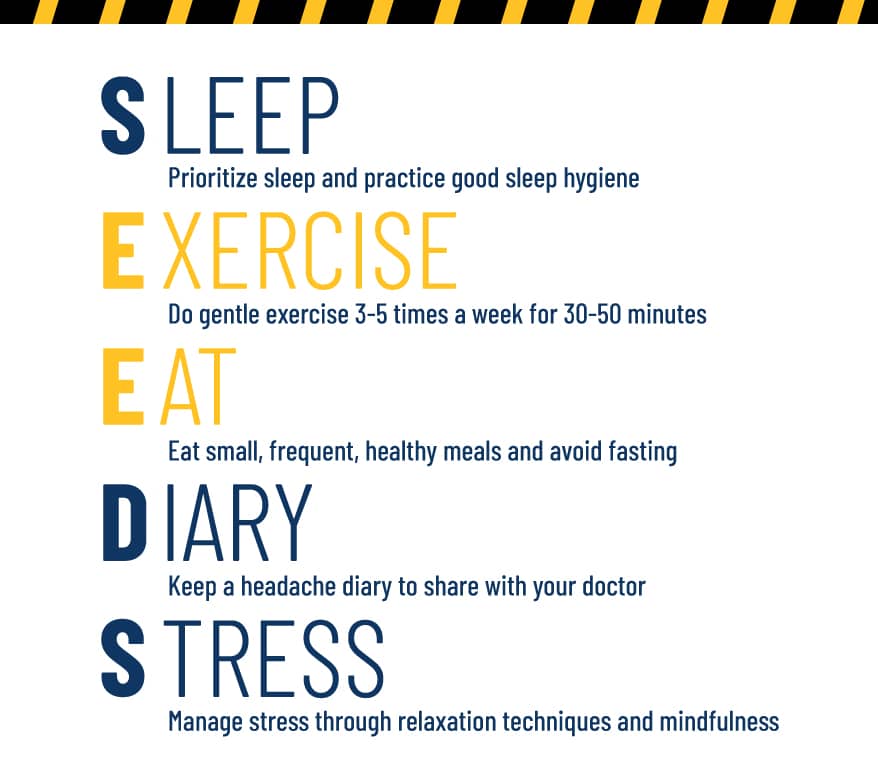
Lifestyle changes can reduce triggers, including driving triggers. The American Migraine Foundation recommends using the SEEDS acronym to remember the top five lifestyle changes to manage your migraines:
After Driving
- Take care of yourself. Take the time to rest and hydrate. Try to eat if you are not nauseous. Do not attempt to drive until you fully recover.
- Write down the details. Note when your migraine started, your symptoms, what may have triggered it, and how you responded to medication. This could help you reduce migraines while driving in the future.
- Evaluate your action steps. Was your strategy for managing your migraine helpful? What improvements could you make to your action plan?
- Consult your doctor. If you continue to experience migraines without improvement, revisit your treatment plan.
- Consider alternative transportation. If migraines frequently interfere with driving, look for safe alternatives, such as public transit or carpooling.
Legal Implications of Driving with a Migraine
No law in Maryland or other states explicitly prohibits driving with a migraine. However, it is illegal in all 50 states to drive impaired. Impaired driving is not limited to driving under the influence. You can face criminal penalties for driving under any type of impairment.
If you experience visual disturbances, dizziness, light sensitivity, nausea, or intense headache pain, you may be considered ‘impaired’ under general traffic laws. When in doubt, don’t drive.
Driving with a migraine could also expose you to civil liability if you cause an accident while driving with a migraine and injure someone. You could also face enhanced criminal charges. Always put your safety and the safety of others first, and consult with your health care provider if you are unsure about whether you can safely drive during a migraine attack.
Where to Get Help
If you are experiencing migraines and they are interfering with driving and other daily activities, you do not have to live with the condition alone. The resources below will empower you to learn more about migraines, treatment options, and support resources.
Migraine Support Groups
The following support groups are available nationwide to help you connect with other people who suffer from migraines and gain valuable information to help you reduce their impact on driving and your independence:
- Move Against Migraine support group: a Facebook community offered by the American Migraine Foundation, where you can connect with other migraine sufferers and share stories and inspiration
- Mayo Clinic Headache & Migraine support group: A community for migraine sufferers and caregivers, moderated by Mayo Clinic Connect
- Living Positively with Chronic Pain: An online support group based in Bethesda, Maryland, with over 700 members
Migraine Advocacy and Education
The following organizations are dedicated to raising migraine awareness and providing educational resources for people affected by migraines and the general public:
- The American Migraine Foundation: Fundraising efforts for migraine awareness and research, and education for health care providers and migraine patients
- Miles for Migraine: Fundraising events to find a cure, social events, education, and support for people living with migraines
- Migraine.com: An online community that seeks to educate the public about what migraine sufferers experience and support people with migraines
- National Headache Foundation: Migraine education for patients and health care providers, offering a headache diary, information on clinical trials, and support for veterans coping with migraines
Health Care Providers
Treatment is available for migraines, and a doctor can help you reduce the frequency, severity, and impact through medication and lifestyle changes. A doctor can also advise you on whether you can drive safely with a migraine.
Your primary care doctor is usually a good starting point for migraine diagnosis and treatment. Due to the complexity of migraine headaches, medical treatment may take some time to yield results. If you are dissatisfied with your current regimen, ask your doctor for a referral to a neurologist or headache specialist. Headache specialists are neurologists with special training in headaches and migraines. New research in migraine management is ongoing, and headache specialists have access to the latest information and clinical trials.
Financial Assistance
If you have frequent migraines that regularly prevent you from working, you may qualify for disability assistance through the following programs:
- Social Security Disability Insurance (SSDI) for individuals with disabilities and a qualifying work history
- Supplemental Security Income for people with disabilities and limited resources
- Long-term or short-term disability insurance through an employer
- Personal injury lawsuit damages if a traumatic brain injury led to your migraines
- Workers’ compensation if a job-related injury led to your migraines
- VA disability if military service led to your migraines
Legal Counsel
A knowledgeable injury lawyer can advise you on the legal consequences of driving with a migraine and help you file an injury claim if any type of accident led to your migraines. If you are in Maryland or the Mid-Atlantic, we can connect you with high-quality medical care and provide fearless legal representation with state-of-the-art communication 24/7. Call (410) 449-7900 or contact us online for a free consultation.

Migraine Awareness and Safe Driving
Driving with a migraine is dangerous when impaired vision, light sensitivity, visual disturbances, and intense pain take your focus off the road and slow your reaction times. Not being able to drive because of migraines can make you feel dependent on others, but with the right support and treatment, you can reclaim your independence and confidently navigate life’s journeys, both on and off the road.