When determining how bad weather can affect your car accident claim, the key question is whether the drivers involved acted responsibly for the conditions at the time of the crash. While bad weather may contribute to an accident, Maryland drivers are still required to adjust their speed, awareness, and decisions when conditions are dangerous. When they fail to do so, weather can strengthen a claim rather than weaken it.
This is where a Maryland car accident lawyer can help level the playing field. At Adam Smallow Injury Lawyers, we explain how weather factors into your case, help you access medical care, and guide you forward while you focus on healing.
The Impact of Bad Weather on Car Accident Claims
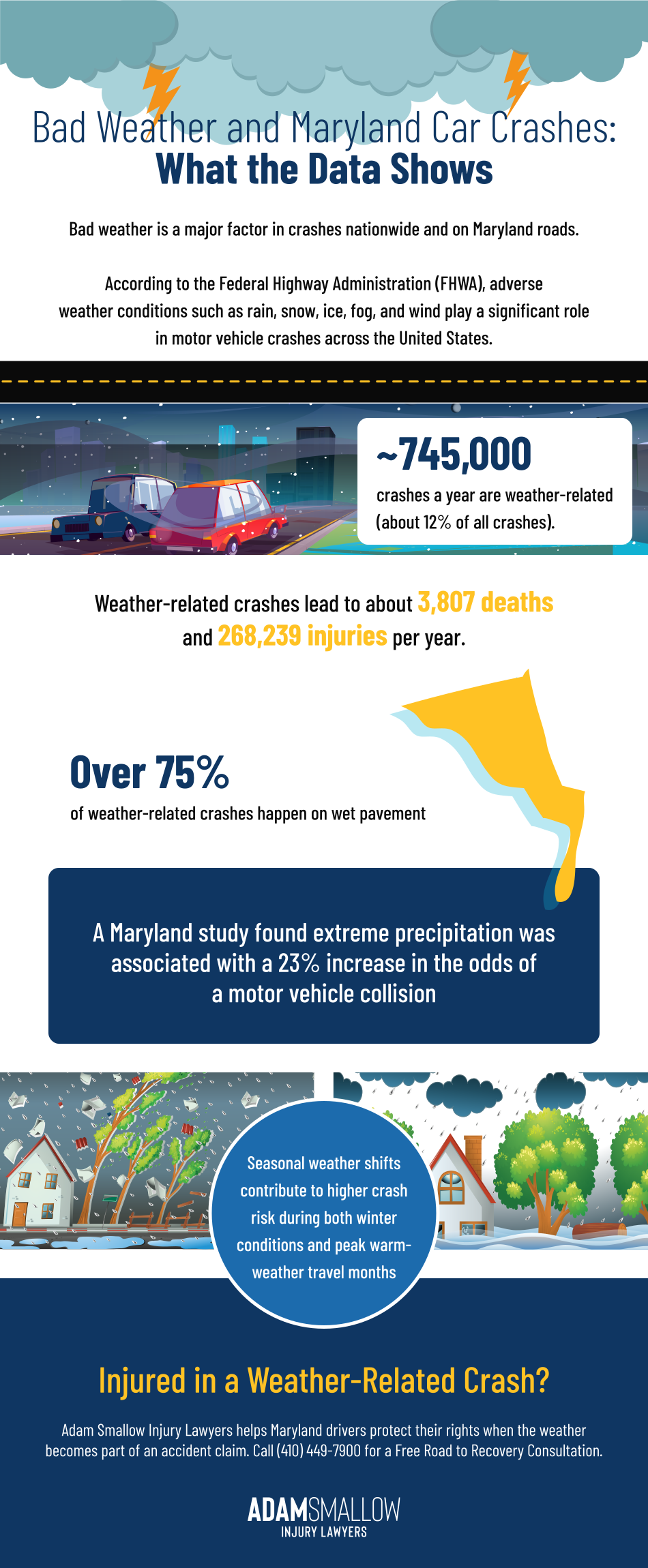
Bad weather can change how a car accident claim is investigated, argued, and valued, especially in a state like Maryland. According to the Federal Highway Administration, about 12% of crashes nationwide are weather-related, making weather a frequent issue in determining fault, insurance responsibility, and compensation.
How Fault Is Evaluated in Maryland Weather-Related Accidents
Maryland is an at-fault state for car accidents, meaning the driver who caused the crash is responsible for paying for the damages. In bad weather accidents, fault often depends on whether a driver adjusted their driving behavior to account for conditions like rain, snow, ice, or limited visibility.
Maryland also follows a strict contributory negligence rule. If an injured person is found even slightly at fault for a crash, they may be barred from recovering compensation. That is why thorough fault analysis and strong advocacy are crucial in these cases.
Who Is Liable for a Car Accident in Bad Weather in Maryland?
Bad weather alone does not determine liability in a Maryland car accident. Even when rain, snow, or poor visibility contribute to a crash, responsibility still depends on whether a driver acted reasonably for the conditions. Drivers are expected to recognize hazardous weather conditions and adjust their driving accordingly. When they do not, they may be held liable for the accident.
Drivers may still be considered negligent in bad weather if they:
- Drive too fast for wet, icy, or low-visibility conditions
- Follow other vehicles too closely
- Fail to use headlights or signals when visibility is reduced
- Lose control due to sudden braking or unsafe maneuvers
- Ignore weather warnings or road condition advisories
In these cases, weather becomes part of the context, but liability centers on the driver’s decisions, not the conditions themselves.
How Insurance Companies Use Bad Weather to Challenge Car Accident Claims
Insurance companies often point to bad weather as a way to minimize or deny car accident claims. In Maryland, insurers may argue that rain, ice, or poor visibility caused the crash, rather than the actions of their insured driver. Framing the accident as unavoidable allows insurers to dispute fault and reduce what they are willing to pay.
Because Maryland’s contributory negligence rule can bar compensation entirely, these arguments are especially powerful. That is why weather-related accident claims often face more pushback and require clear evidence and careful handling from the start.
How Bad Weather Impacts Commercial Truck Accident Claims in Maryland
Bad weather plays a much different role in commercial truck accident claims because federal safety regulations impose a higher duty of care on commercial drivers during hazardous weather conditions. Under Federal Motor Carrier Safety Administration (FMCSA) rules, drivers must reduce their speed or discontinue driving if hazardous conditions, such as snow, ice, sleet, fog, or heavy rain, make operation unsafe.
When a truck driver pushes forward anyway, that decision can become a key part of the case. If the evidence shows that the driver failed to slow down, increase their following distance, or pull off the road when conditions demanded it, it can strengthen a claim by highlighting a preventable risk. Research also supports why this matters: crash risk increases during active precipitation, and the risk climbs further as precipitation becomes heavier, when visibility and traction can change fast.
Motorcycle Riding Risks During Maryland’s Warmer Months
Motorcycle crashes are more common in Maryland during the warm-weather months, when more riders are on the road. Maryland traffic safety data shows a higher proportion of motorcycle-involved crashes occur from May through September, and motorcycles are also over-represented in fatal crashes statewide.
While clear weather encourages more riders on the road, changing road conditions, sudden storms, and high traffic volumes can create dangerous situations for motorcyclists. Weather-related hazards that may be manageable for passenger vehicles can be devastating for motorcyclists.
Get on the road to recovery with competent legal representation and high-quality medical professionals. Contact our Maryland personal injury lawyer today.
What Maryland Law Says About Driving in Bad Weather
Maryland law requires drivers to adjust their speed and driving behavior to match current road and weather conditions. Under Maryland Transportation § 21-801, a driver may not operate a vehicle at a speed greater than is reasonable and prudent given existing hazards such as rain, snow, ice, limited visibility, or other dangerous conditions. Drivers are also required to control their speed as necessary to avoid collisions with people or vehicles lawfully using the roadway.
Maryland also has safety rules designed to improve visibility during bad weather. For example, under Maryland Transportation § 22-201.2, drivers are required to turn on their headlights when using their windshield wipers due to rain or snow. This rule is intended to help drivers see and be seen during poor weather conditions, reinforcing the broader expectation that motorists take extra care when the weather affects the roadway.
Common Weather Conditions That Lead to Car Accidents in Maryland
Certain weather conditions increase the risk of crashes by reducing visibility, traction, or reaction time, making it harder for drivers to operate safely. A Maryland study found that each additional day of extreme precipitation was associated with about a 23% increase in the odds of a motor vehicle collision.
- Rain and wet roads: Reduce tire traction and increase stopping distance, especially when water mixes with oil and debris on the roadway.
- Snow, ice, and sleet: Create slippery surfaces that make braking and steering difficult, even at low speeds.
- Fog and low visibility: Limit a driver’s ability to see vehicles, hazards, and traffic signals in time to react.
- Heavy storms and sudden downpours: Increase the risk of hydroplaning and loss of control due to standing water and poor visibility.
- Seasonal weather changes: Produce unpredictable conditions, such as early freezes or sudden storms, that drivers may not be prepared to handle.
From Hurt to Help After a Maryland Car Accident Involving Bad Weather
If you’re wondering how bad weather can impact your car accident claim, having the right support early on can make a significant difference. At Adam Smallow Injury Lawyers, we help injured Maryland drivers cut through confusion, preserve critical evidence, and build strong claims when weather conditions become part of the story.
Our team focuses on uncovering what truly caused the accident, documenting road and weather conditions, coordinating medical care, and handling insurance communications so that weather is not used as an excuse to undervalue your claim.
Call (410) 449-7900 or contact us online today for a Free Road to Recovery Consultation.